
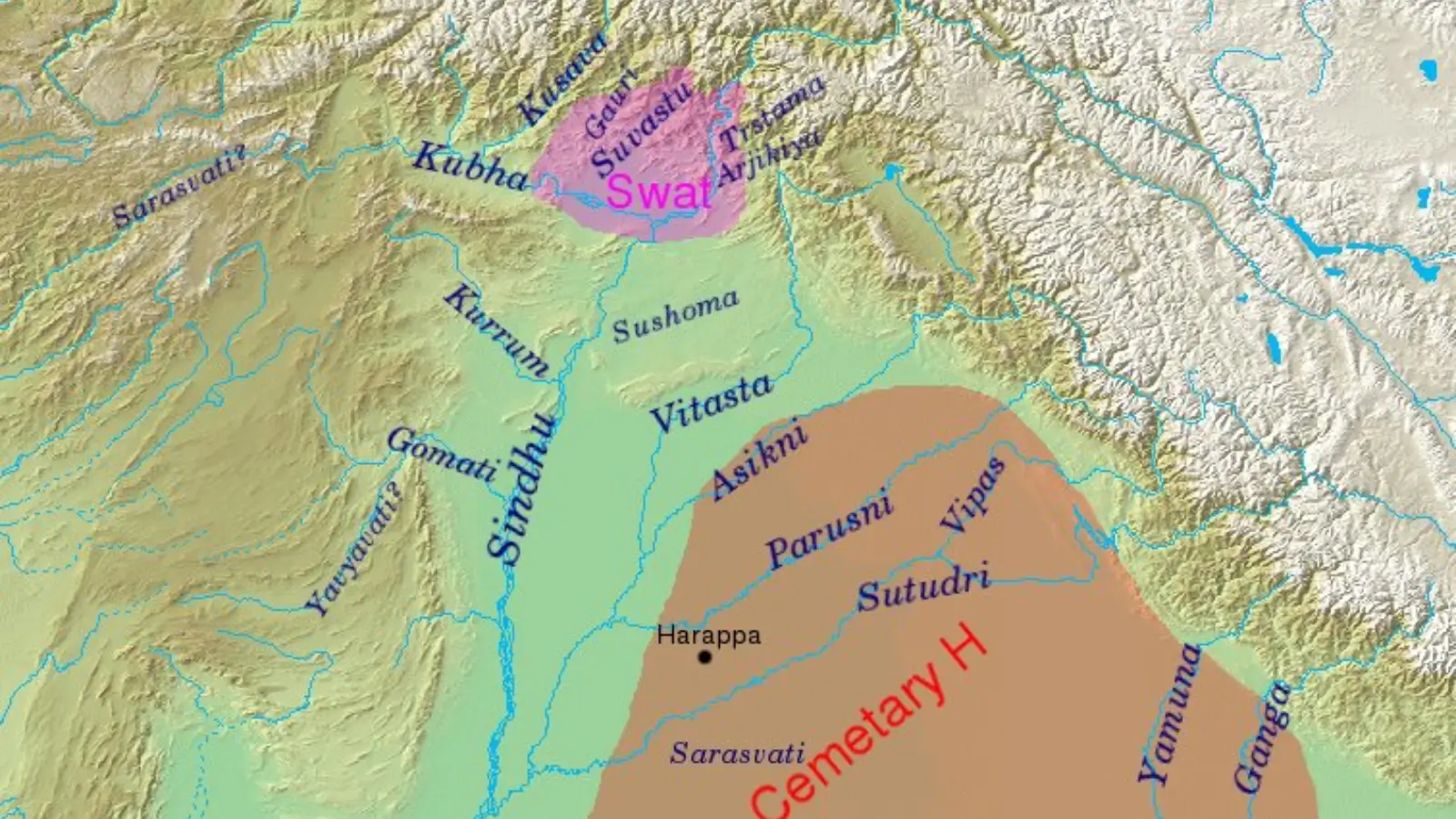
The rivers of the Indus Valley system occupy a central place in the geographical, cultural, and historical evolution of early India. From the earliest Rigvedic hymns to later Sanskrit literature and Greek historical accounts, these rivers were known by different names, each reflecting the linguistic traditions, cultural perceptions, and historical encounters of their time.
Understanding the Rigvedic names, other ancient Sanskrit names, modern local names, and Greek equivalents of these rivers is essential for comprehending the spatial framework of the Indus Valley Civilisation, the Sapta Sindhava region, and the narratives associated with Alexander’s invasion. This article presents a clear, comparative overview of the major rivers of the Indus Valley system, enabling aspirants to connect ancient texts with modern geography in an exam-oriented and conceptually coherent manner.
Indus River | Sindhu | Indos
The Indus River was known in the Rigveda as Sindhu, a term that originally meant a mighty river and later came to denote the entire north-western region of the subcontinent. In ancient Sanskrit literature, it continued to be called Sindhu. The local name in present-day usage is Indus (English) and Sindh/Darya-e-Sindh in regional languages. The Greeks, encountering the river during Alexander’s campaigns, referred to it as Indos, from which the name India is derived.
Jhelum River | Vitasta | Hydaspes
The Jhelum River is identified with the Rigvedic river Vitastā or Vitasta. This name is consistently mentioned in Vedic and later Sanskrit texts. In ancient times, it retained the name Vitastā, while its local name evolved into Jhelum, derived from the town of the same name. The Greek name for the river was Hydaspes, famously associated with the Battle of Hydaspes fought between Alexander and King Porus.
Chenab River | Askini | Chandrabhaga | Acesines
The Chenab River was known in the Rigveda as Asiknī or Askini meaning “dark-coloured” or “black”, referring to the colour of its waters. In later Sanskrit sources, it came to be known as Chandrabhaga, a compound of Chandra and Bhaga. The local modern name is Chenab, a shortened and Persianised form of Chandrabhaga. The Greeks referred to it as Acesines.
Ravi River | Parusni | Iravati | Hydraotes
The Rigvedic name of the Ravi River is Paruṣṇī, or Parusni frequently mentioned in connection with early Vedic battles, including the Battle of Ten Kings (Daśarājña). In later Sanskrit texts, the river is referred to as Iravati. The modern local name is Ravi, derived from Iravati. The Greek name for the river was Hydraotes.
Beas River | Vipasa | Hyphasis
The Beas River was called Vipāśā or Vipasa in the Rigveda, a name meaning “unfettered” or “free-flowing”. This name continued in classical Sanskrit usage as well. The modern name Beas is a later linguistic transformation. The Greeks referred to this river as Hyphasis, marking it as the easternmost limit of Alexander’s advance into India.
Sutlej River | Sutudri | Hesidros
The Rigvedic name of the Sutlej River is Śutudrī or Sutudri. In later Sanskrit literature, it also appears as Shatadru, meaning “river of a hundred streams”. The modern local name is Sutlej. Greek sources mention it as Hesidros (sometimes identified less consistently than other rivers).
Saraswati (Ghaggar–Hakra System)
The Saraswati River, extensively praised in the Rigveda, is considered part of the broader Indus Valley river system, though it is largely dried up today. Its Rigvedic and Sanskrit name is Saraswati. The local names of its remnant channels are Ghaggar (India) and Hakra (Pakistan). The river does not have a clearly established Greek name, as it had already begun declining by the time of Greek contact.
Rigvedic, Ancient, and Greek Names of Rivers of the Indus Valley System
| Modern / Local Name | Rigvedic Name | Other Ancient Sanskrit Name(s) | Greek Name | Key Exam Notes |
|---|---|---|---|---|
| Indus | Sindhu | Sindhu | Indos | Name “India” derived from Greek usage |
| Jhelum | Vitastā | Vitastā | Hydaspes | Battle of Hydaspes (Alexander vs Porus) |
| Chenab | Asiknī | Chandrabhaga | Acesines | Name refers to dark-coloured waters |
| Ravi | Paruṣṇī | Iravati | Hydraotes | Mentioned in Battle of Ten Kings |
| Beas | Vipāśā | Vipasha | Hyphasis | Easternmost limit of Alexander’s campaign |
| Sutlej | Śutudrī | Shatadru | Hesidros | Meaning “river of a hundred streams” |
| Saraswati (Ghaggar–Hakra) | Saraswati | Saraswati | — | Major Rigvedic river, now largely dried |
In conclusion, the study of the Rigvedic, ancient, local, and Greek names of the rivers of the Indus Valley system offers a valuable bridge between textual history and physical geography. These multiple nomenclatures not only help in accurately identifying rivers mentioned in the Rigveda, later Sanskrit texts, and Greek sources, but also illuminate patterns of settlement, cultural continuity, and external contact in north-western India.
FAQs (Frequently Asked Questions)
Question: What were the Rigvedic names of the rivers of the Indus Valley system?
Answer: The Rigveda refers to the rivers of the Indus Valley system using ancient Sanskrit names such as Sindhu (Indus), Vitastā (Jhelum), Asiknī (Chenab), Paruṣṇī (Ravi), Vipāśā (Beas), Śutudrī (Sutlej), and Saraswati. These rivers collectively formed the geographical core of the Sapta Sindhava region.
Question: Which Rigvedic river is identified with the modern Ravi River?
Answer: The modern Ravi River is identified with the Rigvedic river Paruṣṇī. It is prominently mentioned in connection with the Battle of Ten Kings (Daśarājña), one of the most significant political events described in the Rigveda.
Question: What were the Greek names of the Indus Valley rivers?
Answer: Greek historians and geographers used distinct names for Indian rivers encountered during Alexander’s invasion. The Indus was called Indos, Jhelum Hydaspes, Chenab Acesines, Ravi Hydraotes, Beas Hyphasis, and Sutlej Hesidros. These names are crucial for correlating Greek accounts with Indian geography.
Question: Why do Indus Valley rivers have multiple names?
Answer: Indus Valley rivers have multiple names because they were recorded by different civilisations and languages over time. The Rigvedic names reflect early Indo-Aryan traditions, Sanskrit names appear in later classical texts, local names evolved through regional usage, and Greek names emerged from foreign historical accounts.
Question: Which river of the Indus system was called Asiknī in the Rigveda?
Answer: The Chenab River was known as Asiknī in the Rigveda. The name means “dark-coloured,” likely referring to the appearance of its waters. In later Sanskrit texts, it came to be known as Chandrabhaga.
Question: What is the Rigvedic name of the Jhelum River?
Answer: The Jhelum River was known in the Rigveda as Vitastā. Greek sources later referred to it as Hydaspes, and it is historically associated with the famous Battle of Hydaspes between Alexander and King Porus.
Question: Is the Saraswati River part of the Indus Valley system?
Answer: Yes, the Saraswati River, identified today with the Ghaggar–Hakra system, is considered part of the broader Indus Valley river system. It is one of the most celebrated rivers in the Rigveda, although it is now largely dried up.
Question: Which river marked the easternmost limit of Alexander’s invasion?
Answer: The Beas River, known as Vipāśā in the Rigveda and Hyphasis in Greek sources, marked the easternmost limit of Alexander’s campaign in the Indian subcontinent.
Question: Why are Greek river names important for UPSC exams?
Answer: Greek river names are important because UPSC frequently tests the ability to correlate ancient Indian geography with foreign accounts, especially in questions related to Alexander’s invasion, ancient history, and match-the-following formats.